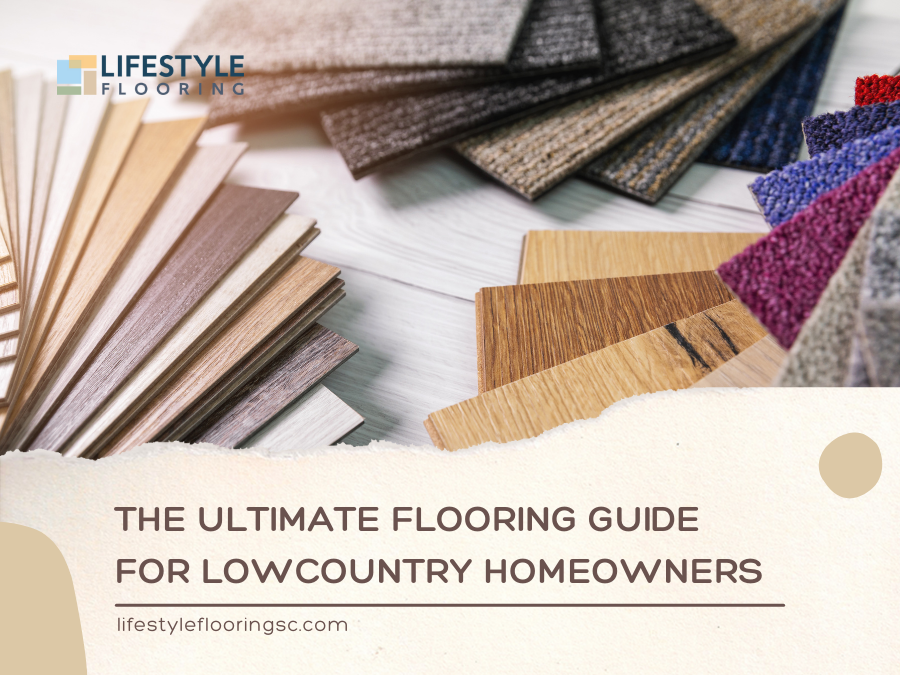
The Ultimate Flooring Guide for Lowcountry Homeowners
Choosing the right flooring is one of the most impactful decisions you’ll make for your home. With over 30 years of experience in the Lowcountry, we’ve helped thousands of homeowners navigate this important choice. This guide covers everything you need to know to make a confident decision that suits your climate, lifestyle, and budget.
What Is the Best Flooring for Your Home?
There’s no single “best” flooring—the optimal choice depends on your room, lifestyle, and priorities. Here are the top contenders:
- Luxury Vinyl Plank (LVP): Most versatile. 100% waterproof, durable, affordable, and performs beautifully in our humid climate.
- Hardwood Flooring: Timeless elegance. Adds the most home value. Engineered hardwood works better than solid in the Lowcountry.
- Porcelain Tile: Unmatched durability. Perfect for high-moisture areas like kitchens and bathrooms. Lasts 50+ years.
- Carpet: Ultimate comfort for bedrooms. Modern stain-resistant options are more practical than ever.
When choosing flooring, consider: durability, maintenance requirements, climate compatibility, aesthetic appeal, long-term value, and budget. The best flooring balances these factors for your specific situation.
Understanding Different Flooring Types
Hardwood Flooring
Solid Hardwood: One piece of wood (3/4″ thick). Can be refinished 4-7 times. Best for controlled-humidity environments. Lasts 75-100+ years.
Engineered Hardwood: Real wood veneer over plywood core. More stable in humidity. Can be refinished 1-3 times. Lasts 20-40 years. Better for coastal climates.
→ Read More: Our Hardwood Flooring: Complete Guide covers species selection, finishes, and maintenance.
Luxury Vinyl Plank (LVP)
- 100% waterproof core
- Highly scratch and stain resistant
- Softer and quieter than tile or hardwood
- Lasts 10-25 years depending on quality
- Look for 20+ mil wear layer and 8mm+ thickness
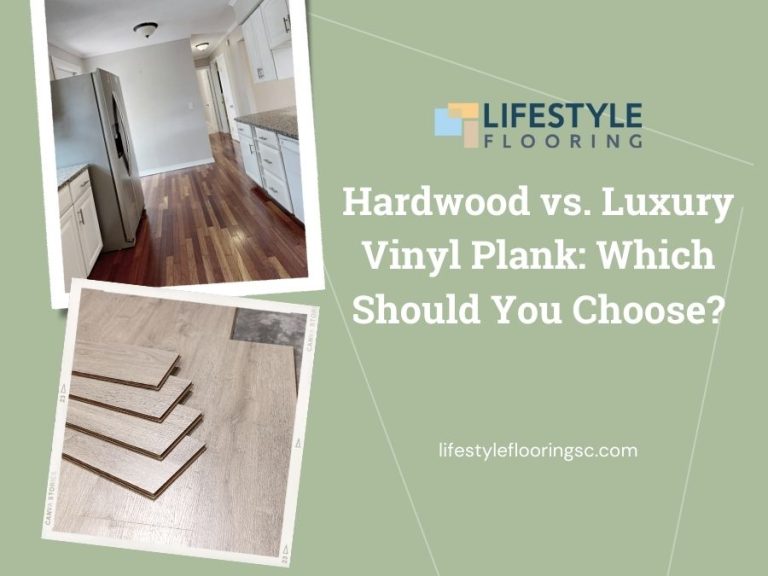
Read More: Hardwood vs. Luxury Vinyl Plank Comparison helps you decide between these popular options.
Tile Flooring
Porcelain: Extremely dense, less than 0.5% water absorption, harder than ceramic. Best for floors. Lasts 50+ years.
Ceramic: More affordable, 3-7% water absorption. Great for walls and lighter use. Lasts 50+ years.
Read More: Porcelain vs. Ceramic Tile Guide xplains which to choose for your project.
Laminate Flooring
Photo layer over fiberboard core with protective wear layer. Scratch-resistant, affordable hardwood alternative. Cannot be refinished. Waterproof options now available. Lasts 15-25 years.
Carpet
Provides warmth and comfort. Fiber types include nylon (most durable), polyester (soft and affordable), triexta (balance of both), and wool (luxury). Lasts 5-15 years depending on quality and traffic.
Read More: Carpet Buying Guide covers fiber types, construction styles, and choosing the right carpet.
How Long Does Each Flooring Type Last?
Understanding lifespan helps you calculate true value:
- Solid Hardwood: 75-100+ years (with refinishing)
- Engineered Hardwood: 20-40 years
- Luxury Vinyl Plank: 10-25 years
- Porcelain/Ceramic Tile: 50+ years
- Laminate: 15-25 years
- Carpet: 5-15 years
Lifespan depends on quality, installation, maintenance, and environment. In the Lowcountry’s humid climate, waterproof options often outlast wood.
What Is the Most Durable Flooring?
Rankings by Durability:
- Porcelain Tile – Exceptional scratch, dent, and water resistance. Virtually indestructible. Can crack from very heavy drops.
- Luxury Vinyl Plank (Premium) – Excellent scratch resistance (20+ mil wear layer), good dent resistance, 100% waterproof.
- Laminate – Excellent scratch resistance, very good dent resistance. Waterproof versions available. Cannot be refinished.
- Hardwood – Fair scratch/dent resistance (varies by species). Poor water resistance. Can be refinished multiple times.
Best for Specific Needs:
- Pets: Porcelain tile, LVP (20+ mil), Laminate (AC4-AC5)
- Water Exposure: Porcelain tile, LVP, Waterproof laminate
- Active Families: Porcelain tile, LVP, Laminate
Best Flooring for the Lowcountry Climate
Our coastal humidity (70-85%) challenges certain flooring types. Wood expands, adhesives can fail, and mold can develop.
Top Climate-Friendly Choices:
- Luxury Vinyl Plank – Zero expansion/contraction. Mold-resistant. Won’t warp. Our #1 recommendation for Lowcountry homes.
- Porcelain Tile – Completely moisture-proof. Stays cool. Never warps. Perfect for coastal living.
- Engineered Hardwood – More stable than solid wood. Limit to 5″ width planks. Requires climate control (35-55% humidity year-round).
Avoid: Solid hardwood over 3.25″ wide (without serious dehumidification), carpet on concrete slabs, bamboo (absorbs moisture).
Choosing Flooring by Room
Different rooms have different needs. Here’s our quick reference:
| Room | Best Choices | Avoid | Why |
| Kitchen | Porcelain tile, LVP, Engineered hardwood | Carpet, Solid hardwood | Needs water/stain resistance |
| Bathroom | Porcelain tile, LVP | Solid hardwood, Laminate, Carpet | High moisture exposure |
| Living/Dining | Hardwood, LVP, Tile | N/A | Showcase spaces—prioritize aesthetics |
| Bedroom | Carpet, Hardwood + rugs, LVP | Tile | Comfort and warmth matter most |
| Entryway | Porcelain tile, LVP | Carpet, Solid hardwood | Heavy traffic, tracked-in moisture |
| Basement | LVP, Engineered hardwood, Tile | Solid hardwood, Carpet on concrete | Below-grade moisture concerns |
Professional Installation vs. DIY
When DIY Makes Sense:
- Floating LVP or laminate (click-lock systems)
- Small, simple rooms
- You have experience and proper tools
When Pros Are Essential:
- Hardwood (requires specialized tools, expertise, warranty protection)
- Tile (demands perfect leveling, trowel technique mastery)
- Large/complex areas, stairs, patterns
- Your time is valuable
True Cost Reality: DIY saves labor costs but adds tool expenses ($100-500), material waste (5-15%), time (3-5x longer), and risk of expensive mistakes. Professional installation includes expertise, warranty protection, and peace of mind.
Read More: Professional vs DIY Installation helps you honestly assess if DIY is right for your project.
Maintenance Requirements
Hardwood:
- Daily: Sweep/vacuum
- Monthly: Damp mop with wood cleaner
- Every 2-3 years: Maintenance coat
- Every 10-20 years: Refinishing
Luxury Vinyl Plank:
- Daily: Sweep/vacuum
- Weekly: Damp mop
- Avoid: Steam mops, abrasives
- Cannot be refinished
Tile:
- Daily: Sweep and mop
- Annually: Seal grout
- Every 5-10 years: Professional grout cleaning
Laminate:
- Daily: Sweep/vacuum
- Weekly: Damp (not wet) mop
- Avoid: Excess water
- Cannot be refinished
Carpet:
- 2-3x weekly: Vacuum high-traffic areas
- Immediately: Blot spills
- Annually: Professional deep cleaning
→ Read More: Flooring Maintenance Guide provides detailed schedules, product recommendations, and Lowcountry-specific care tips.
Making Your Final Decision
Quick Decision Framework
Consider in order:
- Room function: Kitchen? Bedroom? Bathroom?
- Your lifestyle: Pets? Kids? Busy household?
- Climate reality: Can you control humidity? High moisture area?
- Budget: Initial cost + maintenance costs
- Aesthetic: What look matches your home?
- Timeline: Staying long-term or selling soon?
Common Scenarios
Young Family, Pets, Tight Budget: LVP throughout, budget carpet in bedrooms
Empty Nesters, Long-Term Home: Hardwood in living areas, tile in kitchen/bath, quality carpet in bedrooms
Active Lifestyle, Low Maintenance: Premium LVP everywhere
Questions Before Buying
- What’s the warranty?
- Is professional installation required?
- What’s the total cost installed?
- How does it perform in humidity?
- What maintenance is required?
- What’s the expected lifespan?
Your Flooring Journey Starts Here
Selecting flooring is an investment in your daily comfort, your home’s value, and your family’s memories. In the Lowcountry, our humid climate adds extra considerations—but with the right guidance, you can choose flooring that performs beautifully for decades.
Key Takeaways
- Each flooring type has unique advantages—choose based on your specific needs
- Quality materials and professional installation protect your investment
- Climate compatibility is critical in our humid coastal region
- Match flooring to room function and your lifestyle for best results
- Proper maintenance dramatically extends lifespan
Ready to Explore Your Options?
Visit our Hilton Head showroom to see, touch, and compare materials in person. Our team understands both flooring and coastal living—we’re here to help you make the perfect choice.